
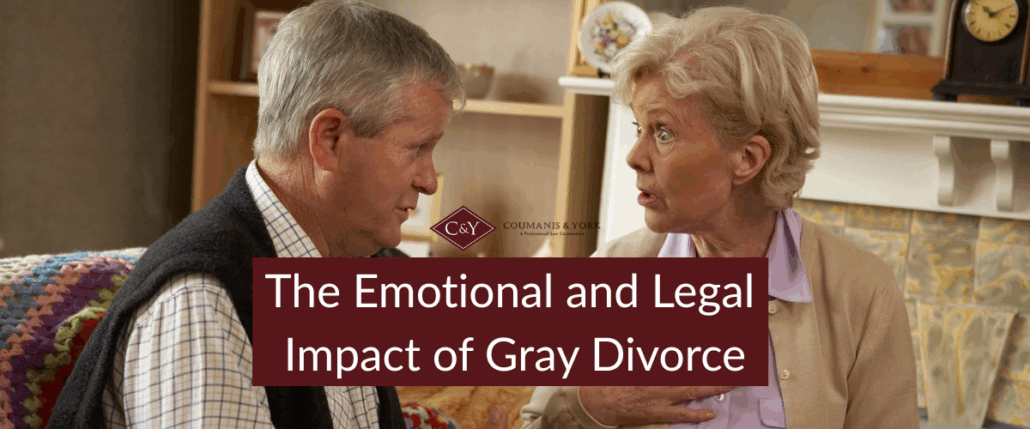
The Emotional and Legal Impact of Gray Divorce
A divorce at any stage of life marks a profound transition, but for those ending a long-term marriage after the age of 50, the experience is uniquely challenging. This phenomenon, often called “gray divorce,” has become increasingly common across the nation, and Alabama is no exception. Couples who once envisioned their golden years together are now facing the daunting task of untangling decades of shared lives, finances, and memories. Unlike younger couples, those in a gray divorce are not typically concerned with child custody but instead face a distinct set of emotional and financial hurdles that can redefine their future.
The Emotional Reality of Divorcing After 50
The end of a marriage that has spanned 20, 30, or even 40 years carries a significant emotional weight. It is more than the loss of a partner; for many, it represents the loss of a shared identity and a future that was long taken for granted. The roles of husband and wife, co-parent, and life partner become deeply ingrained, and the dissolution of that partnership can leave a person feeling adrift, questioning who they are now.
This emotional turmoil is often compounded by a sense of time lost and regret. The “sunk cost” of years invested in a relationship that has now ended can lead to feelings of sadness, anger, and shame. For many, particularly those who may have set aside personal or career ambitions for the sake of the family, this period can be marked by a profound identity crisis. The social fabric of life can also unravel. Mutual friends may feel caught in the middle, and long-established social circles can shift or disappear, leading to intense feelings of loneliness and isolation just when support is needed most.
It is common for individuals going through a gray divorce to experience heightened symptoms of anxiety and depression. Facing the future alone after decades of partnership is a daunting prospect. The process of healing involves not just grieving the end of the marriage but also rediscovering a sense of self and purpose. It is a journey that requires patience, self-compassion, and often, the support of friends, family, or a professional therapist to process the complex emotions involved.
Impact on Family Dynamics and Adult Children
A gray divorce sends ripples throughout the entire family system, and the impact on adult children can be surprisingly profound. While they are no longer young children caught between two homes, they often experience a unique sense of grief and instability. The dissolution of their parents’ long-term marriage can challenge their own perceptions of family, commitment, and relationships.
Adult children may feel compelled to navigate new and often awkward family dynamics. Holidays, birthdays, and family gatherings that were once straightforward now require delicate negotiation. There can be an unspoken pressure to choose sides or a struggle to maintain healthy relationships with both parents without becoming a mediator or confidant, roles they are not equipped to fill. This can be especially difficult when one parent shares inappropriate details about the divorce or the other parent, placing the adult child in an uncomfortable position.
Furthermore, a late-life divorce can trigger concerns about the future. Adult children may worry about their parents’ financial stability, their health as they age alone, and the potential for new caregiving responsibilities. Witnessing the end of their parents’ marriage can also cause them to question the stability of their own romantic relationships. For parents, it is important to communicate openly, respect boundaries, and make a conscious effort to nurture their individual relationships with their children to help everyone navigate this new family structure.
Navigating Alabama’s Legal Landscape in a Gray Divorce
Ending a long-term marriage in Alabama involves a specific set of legal considerations. The state operates under an “equitable distribution” model, which means that marital property must be divided fairly, though not necessarily equally. For couples who have been married for decades, the lines between separate and marital property can become blurred, making the process of asset division particularly complex.
- Property Division: Assets acquired during the marriage, from the family home to bank accounts and vehicles, are generally considered marital property subject to division. The court will look at numerous factors, including the length of the marriage, each spouse’s economic circumstances and earning potential, and their respective contributions to the marriage, including non-financial contributions like homemaking.
- Retirement Accounts: For many older couples, retirement funds like 401(k)s, IRAs, and pensions represent their most significant assets. These accounts, or the portions accrued during the marriage, are considered marital property. Dividing them often requires a specific court order known as a Qualified Domestic Relations Order (QDRO) to distribute the funds without incurring taxes and penalties. Untangling these complex financial instruments requires a detailed approach to ensure a fair outcome.
- Business Interests: If the couple owned a business together or if one spouse started or grew a business during the marriage, valuing and dividing this asset can be one of the most contentious parts of the divorce. A professional valuation is often necessary to determine the business’s fair market value before it can be equitably divided.
Alimony and Financial Support in Long-Term Marriages
Alimony, or spousal support, is a key consideration in many Alabama gray divorces. Its purpose is to provide financial assistance to a spouse who is economically disadvantaged after the end of a long-term marriage. This is particularly relevant when one spouse has been out of the workforce for an extended period to raise a family or support the other’s career.
Alabama courts do not award alimony automatically. A judge will consider several factors, including:
- The length of the marriage: Marriages lasting over 20 years are more likely to result in an alimony award.
- The standard of living during the marriage: The court may try to ensure both parties can maintain a reasonably similar lifestyle post-divorce.
- Each spouse’s earning capacity: The court evaluates each person’s age, health, education, and ability to become self-sufficient.
- Marital misconduct: While Alabama offers no-fault divorce, fault-based grounds like adultery or abandonment can influence an alimony decision.
There are different types of alimony that may be awarded. Rehabilitative alimony is temporary support designed to help a spouse get the education or training needed to re-enter the workforce. For longer marriages, a court might award periodic alimony, which could be paid for a set number of years or, in some cases of very long-term marriages where a spouse is unable to become self-supporting due to age or health, indefinitely.
Revisiting Your Estate Plan After a Divorce
A divorce effectively invalidates key provisions of an existing estate plan. Failing to update documents like wills, trusts, and powers of attorney can lead to unintended and often disastrous consequences, potentially allowing your former spouse to inherit your assets or make critical financial and medical decisions on your behalf.
Immediately after a divorce, it is important to review and revise the following:
- Will: Create a new will to ensure your assets are distributed according to your current wishes. Most state laws automatically treat an ex-spouse named in a will as if they had predeceased you, but creating a new document provides clarity.
- Trusts: If you have a revocable trust, it needs to be amended or restated to remove your former spouse as a beneficiary or trustee. Irrevocable trusts are more complex and may require a court order to modify.
- Beneficiary Designations: Assets like life insurance policies, retirement accounts, and payable-on-death bank accounts pass directly to the named beneficiary, regardless of what your will says. It is absolutely essential to update these designations to name a new beneficiary.
- Powers of Attorney and Healthcare Directives: These documents grant an agent the authority to make financial and medical decisions if you become incapacitated. You will almost certainly want to revoke any powers granted to your ex-spouse and appoint a new, trusted agent.
Moving Forward: Building a New Life with Confidence
Starting over after a long-term marriage is a journey of rediscovery. While the emotional and legal challenges are significant, it is also an opportunity to redefine your life and pursue personal happiness. The process begins with creating a solid financial foundation. This involves developing a realistic budget based on your new financial reality, exploring all potential income sources, and seeking financial guidance when needed.
Building a new support network is equally important. Reconnecting with old friends, exploring new hobbies, or joining social groups can help combat feelings of loneliness and build a sense of community. This is a time for personal growth and focusing on your own well-being. While the path may be difficult, many individuals find that ending an unfulfilling marriage later in life opens the door to new experiences, renewed purpose, and a more authentic future.
Facing a Gray Divorce in Alabama? Protect Your Future.
Ending a long-term marriage in Alabama presents a unique intersection of emotional loss and complex legal challenges. The decisions made during this time will shape your financial security and personal well-being for years to come. If you are facing the complexities of a gray divorce, securing knowledgeable legal guidance is a key step toward protecting your interests and building a stable future. The team at Coumanis & York, P.C. is dedicated to providing compassionate and experienced representation to help you navigate this significant life transition. We encourage you to contact us for a consultation to discuss your situation and learn how we can assist you.



Leave a Reply
Want to join the discussion?Feel free to contribute!